- News
- entertainment
- hindi
- bollywood
- A Personal Ray -Trospective
Trending
This story is from April 24, 2010
A Personal Ray -Trospective
Satyajit Ray’s women exuded a charm that was distinguished, endearing and timeless. On the cineaste’s death anniversary TOI-Crest gets three of his leading ladies to talk about the legend and his unique style of story-telling
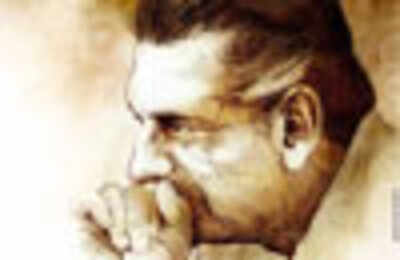
At an age when women were shackled by the chains of tradition and patriarchy, the auteur explored contentious terrains that had female leads articulating change, courage and rebellion.

‘A METICULOUS RESEARCHER’
I was a seasoned actress by the time I did Ray’s films Mahanagar, Charulata and Kapurush. (This was rare for Ray, who usually picked up fresh, raw talent) I had a strong theatre background and had worked with Sisir Bhaduri, Mrinal Sen, Ritwik Ghatak and others. Ray had a very eloquent way of explaining the nuances of a screenplay. His explanation was so detailed and easy to understand that as an actress I never once struggled to play my part.
We shot the opening scene of Charulata that was roughly ten minutes in duration in one take. The credit goes to Ray for getting me to perform that scene without a glitch. It showed that he knew his craft and was confident about his actors.
In Mahanagar, I was given the role of a lead female protagonist. I was delighted that I didn’t have to play second fiddle to a male hero. I have essayed many roles in Ray’s cinema and all of them have been starkly different from each other.
Ray did thorough research on the subject he was dealing with. Charulata was set in 1879 Bengal and he was determined to recreate that period. From how the women draped their sari, to how they behaved and the accessories they carried, everything was outlined in his notebook. I remember distinctly that he sourced old photographs from a rundown photography shop called D Ratan in Kolkata. He studied those photographs and various other manuscripts for hours so as to get the look and feel of Charulata right.
Ray was well-versed with Tagore’s works. His interpretation of Nastanirh in Charulata is flawless. In the concluding scenes, he decided to use freeze-frames to show the rift between the couple — Bhupati and Charu. Only he could capture the tensions of Indian conjugality and the ‘adjustment’ factor so artistically.
— Madhabi Mukherjee
‘THE LAST RENAISSANCE MAN’
During the filming of Samapti in Teen Kanya, I had to drape a sari without a blouse and the fabric of the sari was really thin. At the time I was just a pre-pubescent teen and was traumatised at the thought. I cried inconsolably to my mother about my discomfort, but was reluctant to tell my director. My mother went up to Ray and told him how I felt. Without any cross-questioning, I was given another, thicker sari to wear. Which director does that for a debutante? Ray avoided any discussion on the matter as he knew I would be embarrassed about it. And throughout filming he spoke to me tenderly saying “No one is watching you dear, act freely.”
I respected Ray so much, I never questioned his craft. I just followed his directions blindly. He was a gentle and extremely warm human being. One day, my father decided to pay me a visit on the sets. My father was the sort who would never come to a film set but he made an exception for Ray. So when he walked in, I got very excited. I had just finished a scene where my dialogue was ‘My father never raised a hand on me.’ After the shot, Ray came up to me and said, ‘The father who has never raised a hand on you, wouldn’t you like to meet him?’
Ray was influenced by Italian neo-realist cinema, partly because it was a cost-effective way of filming. The neo-realist school advocated a simple style of story-telling and did away with the need to hire a star-studded cast or invest in elaborate sets. Lesser known actors were employed and outdoor shooting was encouraged. This sort of filming appealed to Ray and also fitted his monetary restrictions.
I think I have inherited bits of Ray and I think you can see his reflection in my cinema. To me, Ray was the last Renaissance man.
— Aparna Sen
‘THE REAL STAR OF HIS FILMS’
Ray was a very meticulous director. He always had a ready script for his actors and detailed the entire story, frame-by-frame, in his notebook. His films have an enormous shelf-life. Ray’s cinematography and camera movements were lyrical and captivating. One can gauge that the close-ups in his films revealed the inner conflict of his characters. For instance, when I was sitting on a pedestal as a goddess surrounded by chanting priests in Devi, Ray filmed me in extreme closeups that captured my confusion about the ritualistic absurdity of 19th century India where live bodies of women were being worshipped by the family patriarch as a quest to attain salvation. Doyamoyee’s mental trauma could be perceived only through those lingering camera movements.
Ray had a great knack for mixing professionals with raw talent. For instance, in Devi I worked with established artistes such as Chabbi Biswas. Only Ray had the guts to pair actors in such a way.
Ray was a very versatile person who was into various kinds of creative expressions — from music to set design to writing literature to creating illustrations for magazines and books. I also remember him being very fond of comic books, playing Scrabble and watching Hollywood films of Billy Wilder.
I was fourteen when I filmed Devi. During the filming, I used to fall asleep in between scenes as Subrotoda, the lighting director, took enormous amounts of time for lighting. Everyone in the crew went about doing their work and would wake me up minutes before the shot was ready to be filmed. It was a very positive atmosphere on the sets. We worked as one big family.
In Nayak, I was asked to wear spectacles to look a bit older though I thought I looked old enough. Also, Ray was criticised by his peers for working with a matinee idol — Uttam Kumar — but he didn’t pay heed to them. He was confident that the film needed a star. Fittingly, it was after Nayak that Uttam changed his style of acting. He understood the importance of pauses and layered thinking to portray a character. In Nayak, Uttam was unable to get the end scene right, so he merely ended up copying the great director. For, though he remained behind the camera, Ray was the real star of all his films.
— Sharmila Tagore
‘When Ray died, it felt like someone took away my oxygen’
“In all the years that I have worked with Ray, we never spoke to each other. We communicated through gestures, eye contact and subtle facial expressions. We understood each other perfectly,” says Nemai Ghosh, Padma Shri awardee and acclaimed still photographer. Nemai’s black-and-white portraits of the illustrious auteur have found a place in many film anthologies. “I have 90,000 photographs of Ray,” says Nemai with a tinge of nostalgia.
A former theatre veteran and actor, Nemai’s passion for photography began after a friend gifted him a fixed lens QL 17 Canonete. It was the affair of a lifetime. Like words bind a poet, images fuel Nemai’s unfettered imagination. “When I see a photograph, I know what the photographer is thinking,” he says.
Nemai was introduced to Ray on the sets of Goopy Gyne Baga Byne, where his friend Robi Ghosh was playing a crucial role. When Ray glanced at Nemai’s impromptu shots of actors rehearsing on the set, he urged him to click some more. With that very short introduction began a very long relationship, spanning close to 25 years. “Every day, around 6 am, I would land up at his house. Ray would open the door for me, ask me to sit and fetch me a cup of tea and then I would get to work. I filmed him relentlessly, followed him like a shadow. I even had access to the most private corners and crevices of his home. He never questioned me about my choice of shot,” reminisces Nemai who says he hasn’t found a muse as exhilarating as Ray since then. “When Ray passed away, it was as if someone had taken away my oxygen.”
The contemplative play of shadow and light, lines and angles, contours and curves in Nemai’s stunning captures have found many discerning Ray lovers praising his skill. Yet when he was invited by Henri Cartier Bresson to Paris in 1986, Ray expressed concern over his portfolio. “He was embarrassed that I would be showing his pictures to Bresson. He thought he wasn’t that interesting a subject for someone like Bresson.”
Nemai reached Paris via London and met the photojournalist at his house. ‘‘Meet Ray’s photographer,’’ exclaimed Bresson to Serge Tubiana, the editor of Cahier du cinema, an authoritative film magazine started in 1951. “Bresson was eager that my photographs be published in Cahier. Earlier, when Tubiana came to Kolkata to meet me, a colleague played truant and the meeting didn’t happen. But destiny has its own plans. Not only were my stills published in Cahier, I also exhibited my pictures with Tubiana at Cannes in 1991,” recounts Nemai. Unaware of his victory in breaking the clique of European art and culture, Nemai returned to London and told Sandip Ray, Satyajit Ray’s son, about the rendezvous. “Sandip was thrilled. He telephoned his father that very instant and said ‘Baba, Nemai has conquered the world’.”
Even today, Nemai uses his analog Nikon F100 camera and shuns the gimmickry of digital photography. “I experimented with colour, but it didn’t work out. I believe that black-and-white images can stir your soul, captivate you and communicate succinctly. Till date, I have not used flash or any artificial form of lighting. I like to capture a moment in its natural self. To me, modern artifices of enhancing a picture are a crime I’m not willing to stain my hands with.”
Follow us on Twitter for more stories
End of Article
FOLLOW US ON SOCIAL MEDIA






Photostories
entertainment videos

Featured In Movies
Popular Categories
Entertainment NewsBollywood NewsTollywood NewsKollywood NewsMollywood NewsMovie ReviewsLatest Hindi MoviesLatest Tamil MoviesMX PlayerParenting TipsHome RemediesWeight LossBeauty TipsParenting TipsHindi VideosHindi Video SongsBhojpuri Music VideosLatest Telugu MoviesBhojpuri Music VideoHindi TV News
Trending in Entertainment
Latest MoviesBollywood MoviesHollywood MoviesTamil Movies 2024Telugu Movies 2024Malayalam Movies 2024Kannada Movies 2024Marathi Movies 2024Bengali Movies 2024Top Rated Movies 2024Best Hindi MoviesBest English MoviesBest Telugu MoviesBest Tamil MoviesBest Malayalam MoviesBest Kannada MoviesBest Bengali MoviesUpcoming Hindi MoviesBest Movies Of All TimeBest Hindi Movies of All Time
Trending in Etimes
Horoscope TodayNumerology Predictions TodaySean Diddy MotherKarachi Airport ExplosionKamala HarrisPopulated Indian CitiesBelly FatHurricane MiltonSunita WilliamsDepression RiskNepal FloodBarbra StreisandSnoring Prevention TipsDonald TrumpMagnesium DeficiencyRelationship TipsLake Michigan DiscoveryRelationship TipsEkadashi in October 2024
Trending in TV
Trending in Lifestyle
Trending in Regional
Movie Reviews
Binny And Family ReviewLove, Sitara ReviewWill & Harper ReviewWolfs ReviewYudhra ReviewJo Tera Hai Woh Mera Hai ReviewKahan Shuru Kahan Khatam ReviewHis Three Daughters ReviewNever Let Go ReviewDancing Village: The Curse Begins ReviewTransformers One ReviewFirst Love ReviewBerlin ReviewThe Buckingham Murders Review
Upcoming Hindi Movies
Upcoming Regional Movies
Latest News
1st T20I: Dominant India make quick work of BangladeshWorld famous Corpus Clock: A time piece and a haunting work of art'Devara' box office collecton day 10: The Jr NTR film sees 30 percent growth on Sunday despite Navratri festivities, inches towards Rs 250 crore in IndiaYouTube Shorts extends duration to 3 minutesLong farewell: Yellow alert for today and tomorrowWhy are the CEOs of most luxury brands stepping down?Delhi ki festive vibe hi alag hai: Mannara ChopraWWE Hall of Famer Diamond Dallas Page signs new WWE Legends dealNavratri 2024 Day 5: Maa Skandamata, Puja Vidhi, Mantra and SignificanceZodiac Signs Most Likely to SucceedOptical Illusion: Can you find who's the boss in this picture?'All teams will come to Pakistan for Champions Trophy': PCB chairman on India's participationDucking Below The WavesCoin Master free spins and coins for 7 October, 2024: Earn million of coins using today’s linkIndustry upbeat on policy continuity as business confidence index rises to 2-quarter high: CIISuriya shares a warm hug with Karthik Subbaraj as they wrap up shoot of 'Suriya 44'; says 'I made a brother for life'India vs Pakistan: The famous encounters of storied hockey rivalrySeized vehicles, weapons used by Hamas in October 7 attack on display in Israel
Other Group Sites -
ETimes is an Entertainment, TV & Lifestyle industrys promotional website and carries advertorials and native advertising.